
Why AI Will Replace the Most Important Interface in Software
There was a time when dashboards represented the future of technology.
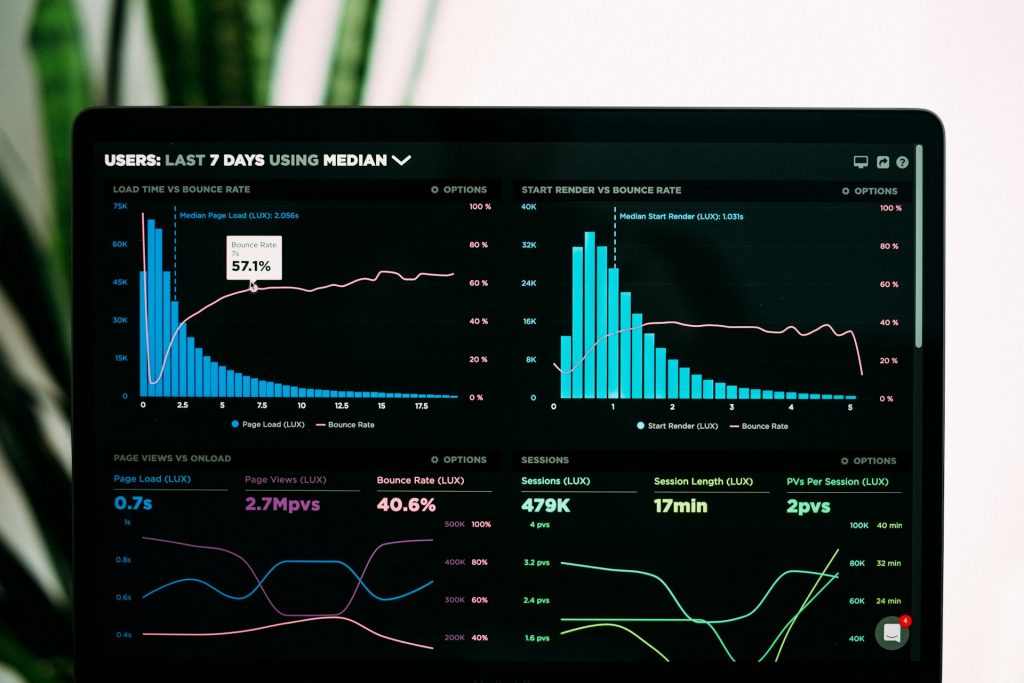
The more advanced a product looked, the more charts it had. Analytics panels became status symbols for startups. Investors loved them. Enterprise clients expected them. Product teams spent years perfecting widget systems, KPI cards, reporting interfaces, and visual data layers designed to make software feel “powerful.”
And for a long time, dashboards actually were powerful.
They solved one of the biggest problems in modern business: information overload.
Companies suddenly had access to enormous amounts of operational data, but very little ability to understand it efficiently. Dashboards emerged as the solution. They transformed raw information into visual structures humans could navigate manually. Revenue trends became graphs. Operational performance became metrics. Customer behavior became funnels. Dashboards gave businesses visibility into systems that had previously been impossible to observe in real time.
But dashboards were built around a very specific technological limitation.
Software could display information.
It could not understand it.
That distinction shaped almost the entire software industry for the last two decades.
Humans remained responsible for interpretation. The machine gathered data, organized it visually, and exposed it through interfaces designed for manual exploration. If something changed inside the business, users had to discover it themselves. If performance dropped, someone had to investigate why. If operational risks emerged, teams needed to search through dashboards, reports, and analytics systems to identify the cause.
The software provided visibility.
The human provided intelligence.
AI changes that relationship completely.
For the first time in mainstream computing history, software is becoming capable of reasoning about information instead of merely presenting it. Modern systems can identify anomalies automatically, explain trends contextually, predict outcomes probabilistically, summarize operational changes, and increasingly recommend actions without requiring users to manually inspect dashboards themselves.
And once software becomes capable of understanding the underlying data, the role of the dashboard starts collapsing.
Not immediately.
But structurally.
Most companies still misunderstand this transition. They think AI improves dashboards. They imagine AI-generated summaries layered on top of existing interfaces. They add chatbot sidebars to analytics tools and call the product “AI-native.” But these changes preserve the same underlying philosophy: humans must still navigate systems manually to extract value.
That assumption is exactly what AI begins eliminating.
Dashboards Were Never Actually the Goal
The software industry became obsessed with dashboards because dashboards solved a problem from a pre-intelligence era of computing.
Businesses generated more information than humans could process naturally. Dashboards condensed complexity into visual environments where users could manually search for meaning. The more operationally sophisticated the company became, the more dashboards it needed. Entire organizations evolved around maintaining reporting systems, business intelligence workflows, KPI architectures, and analytics operations.
But there was always something strangely inefficient about the entire experience.
Nobody genuinely enjoys spending hours inside reporting systems trying to identify why churn increased last month. Nobody wakes up excited to navigate through twenty layers of operational filters searching for hidden trends. Nobody loves exporting CSV files, comparing segmented reports, or manually investigating dashboards filled with endless metrics that may or may not matter.
People tolerated dashboards because there was no alternative.
The machine could not think.
Now it can.
And once software becomes capable of understanding operational context directly, dashboards stop feeling empowering and start feeling bureaucratic.
This psychological shift is already happening across the industry.
Modern users increasingly expect software to explain itself.
When revenue drops, they do not want to manually investigate twelve graphs. They want the system to explain:
- what changed,
- why it changed,
- how important it is,
- and what action should be taken.
That expectation fundamentally changes interface design.
Because the user no longer values visibility alone.
They value cognitive reduction.
The Problem With Most Modern Dashboards
Most enterprise dashboards today are effectively operational warehouses.
They expose enormous amounts of information simultaneously because software historically lacked the ability to determine relevance automatically. Product teams compensated by displaying everything:
- charts,
- filters,
- metrics,
- activity feeds,
- visualizations,
- trend reports,
- operational summaries,
- configurable widgets.
The assumption was simple: more visibility equals more power.
But visibility is only useful when interpretation remains difficult.
Once software can interpret data autonomously, excessive visibility starts creating friction instead of value.
This is why so many modern SaaS platforms feel emotionally exhausting despite being technically advanced. Enterprise software increasingly resembles digital administration systems rather than intelligent operational tools. Users spend enormous amounts of time navigating interfaces instead of achieving outcomes.
The software industry normalized this complexity because complexity once reflected technological limitations.
AI changes those limitations.
And once the limitations disappear, the interface patterns built around them begin feeling outdated very quickly.
AI Changes the Purpose of Software
Historically, software functioned like a passive tool.
Users operated systems manually. They navigated workflows, interpreted information, configured settings, and transformed raw data into decisions themselves. The machine assisted operationally, but cognition remained human responsibility.
AI shifts software from passive infrastructure toward active participation.
Instead of simply exposing information, systems increasingly:
- identify patterns,
- surface relevance,
- predict risks,
- recommend decisions,
- automate repetitive reasoning,
- and proactively assist operational workflows.
This changes the role of interfaces entirely.
Traditional dashboards assume users should explore systems manually. AI-native systems increasingly assume the software should understand what matters before the user asks.
That distinction may ultimately redefine enterprise UX over the next decade.
The future interface may not resemble a dashboard at all.
Instead of opening a product and navigating analytics panels manually, users may encounter continuously generated operational narratives explaining:
- what changed,
- what matters,
- what requires attention,
- what actions are recommended,
- and what risks are emerging.
No dashboard archaeology required.
Why Most SaaS Companies Are Unprepared
The biggest mistake many companies currently make is treating AI as a feature rather than a structural redesign of interaction itself.
Most organizations preserve old software architecture while layering AI on top:
- AI copilots beside dashboards,
- AI-generated insights above charts,
- conversational assistants embedded into reporting systems.
But this approach avoids the more important question:
If AI understands operational context directly, why does the dashboard remain central at all?
That question threatens enormous parts of the existing software ecosystem because dashboards are deeply embedded into how modern organizations think about operations. Entire industries evolved around dashboard-centric workflows. Product teams, analytics departments, reporting systems, and business intelligence architectures all assume that humans must manually interpret information continuously.
But AI increasingly absorbs that responsibility.
And historically, when technology successfully automates cognitive labor, interfaces simplify dramatically afterward.
This happened with infrastructure management.
It happened with software deployment.
It happened with web navigation.
And now it is beginning to happen with operational analysis itself.
The Future of Dashboards
Dashboards will not disappear overnight.
There will always be situations requiring visibility, auditing, operational transparency, and deep analytical control. Large organizations will continue relying on reporting systems for years. But the role of the dashboard is changing fundamentally.
Instead of acting as the primary workspace, dashboards increasingly become secondary validation environments — places users visit occasionally rather than live inside continuously.
The center of the experience shifts elsewhere.
Toward intelligent systems capable of reducing operational complexity automatically.
The most successful software products of the next decade will likely not be the ones exposing the most information. They will be the ones removing the most unnecessary thinking.
That is the real disruption AI introduces into software design.
Not prettier interfaces.
Not smarter charts.
The gradual collapse of manual interpretation itself.
And once that transition fully matures, many of today’s dashboards will feel like artifacts from an earlier era of computing — interfaces designed for a world where machines could store information, but could not yet understand it.
We are leaving that world now.
Quietly.
But permanently.
Read more on Medium WeDesignMarbella about Web Design in Marbella.
